A Community-Owned Grocery for Bloomingdale
Restoring dependable food access, strengthening local producers, and building community wealth in the heart of our village.
Bringing Everyday Food Access Back Home
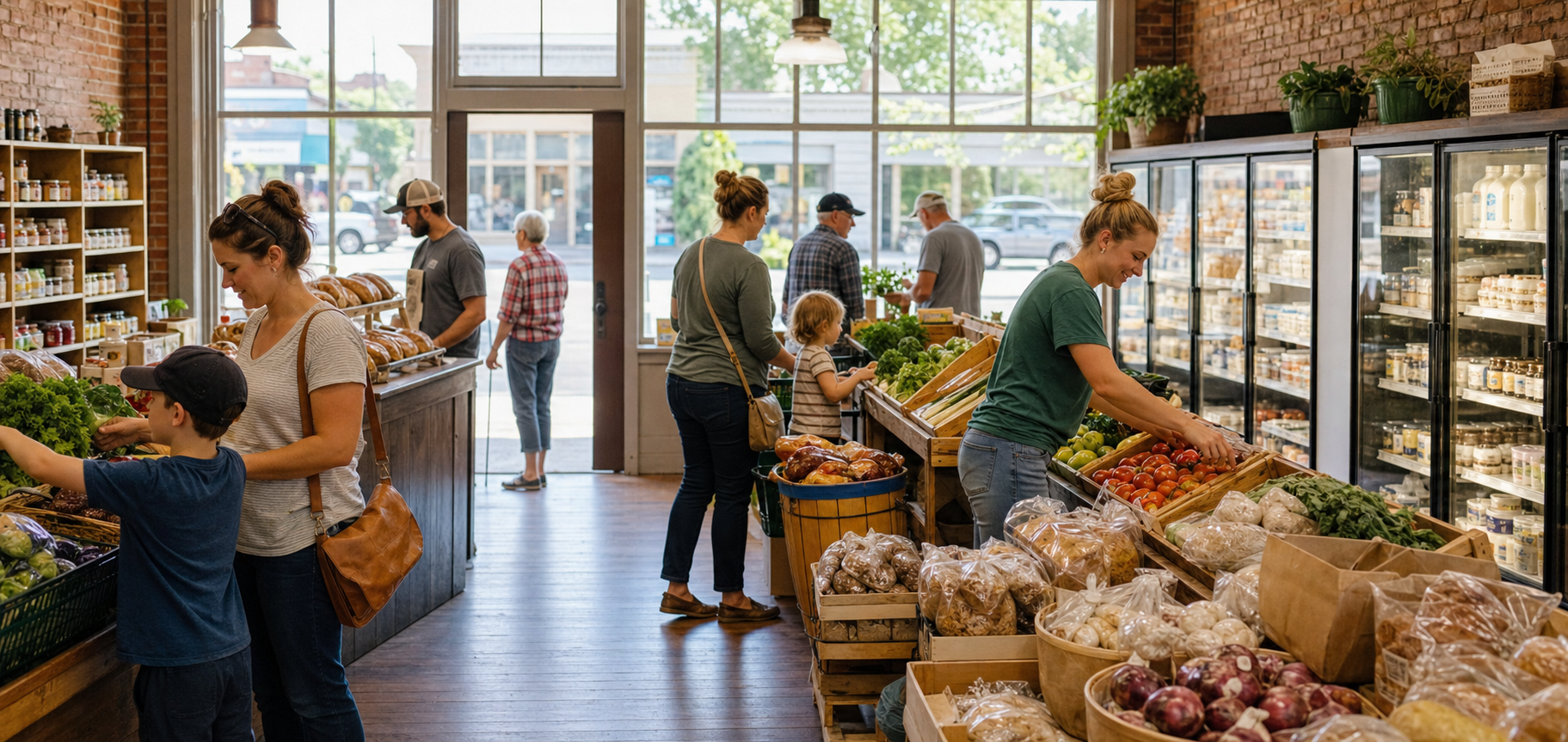
When Bloomingdale’s only grocery store closed, our community lost more than a convenient place to shop. Residents were left traveling outside the village for groceries, while local producers and small businesses lost an important connection to their neighbors.
The Bloomingdale Food Access Project is our community’s response.
We are working to establish a community-owned grocery that provides dependable access to everyday food, creates opportunities for local and regional producers, and keeps more of our community’s resources circulating close to home.
This is not simply about opening another store. It is about building an institution that Bloomingdale residents can help shape, support, and ultimately own together.
A Permanent Home at the Cardinal Club
The Bloomingdale Development Association has executed a purchase agreement for the historic Cardinal Club building at 109 N. Van Buren Street.
Financing has been secured, inspections have been completed, and the project is now awaiting closing.
Once the transaction is complete, the Cardinal Club is intended to become a permanent community asset and the future home of the Bloomingdale Community Co-Op.
Its downtown location and approximately 10,000 square feet of space create an opportunity to bring grocery access, local food activity, small-enterprise development, and community programming together under one roof.
The purchase remains subject to completion of closing.
Our Vision for the Building
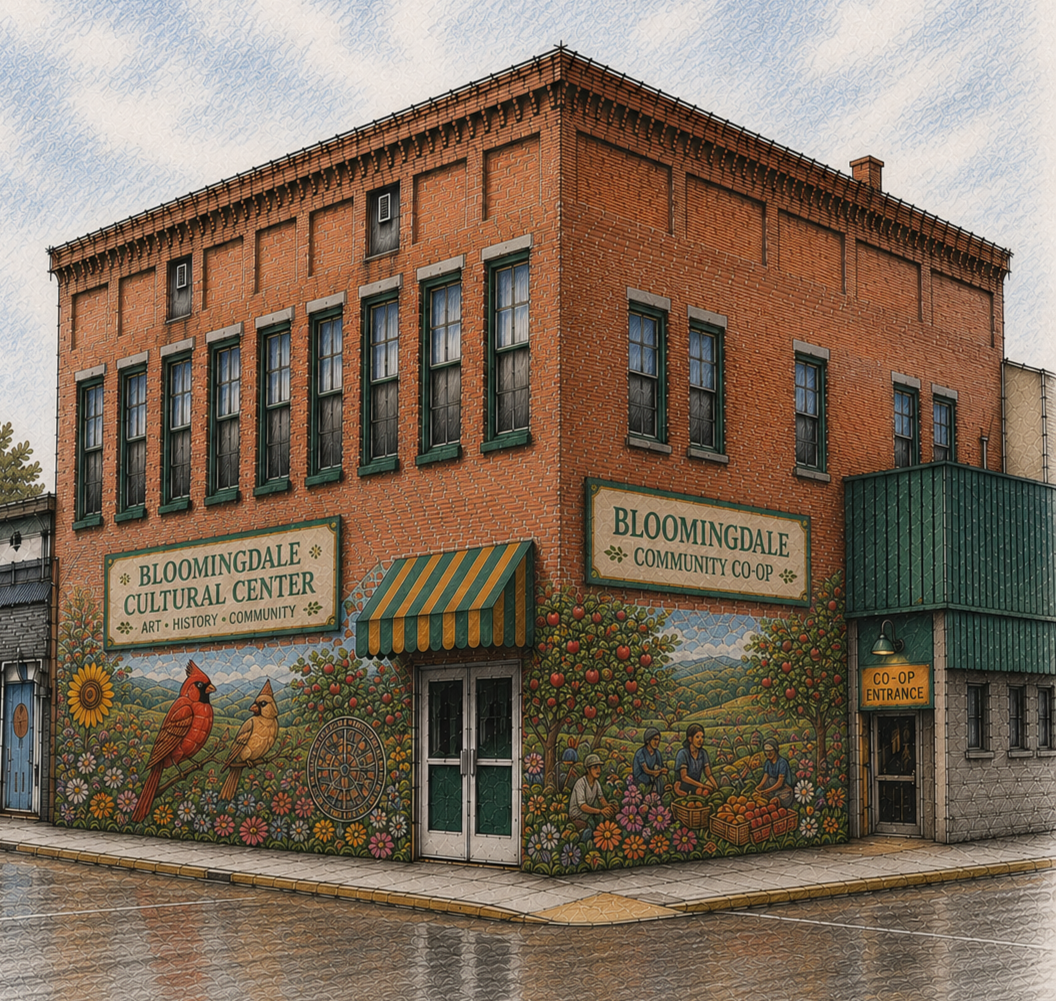
The Cardinal Club gives Bloomingdale an opportunity to restore a historic downtown property while creating something useful for the community’s future.
The developing vision includes:
-
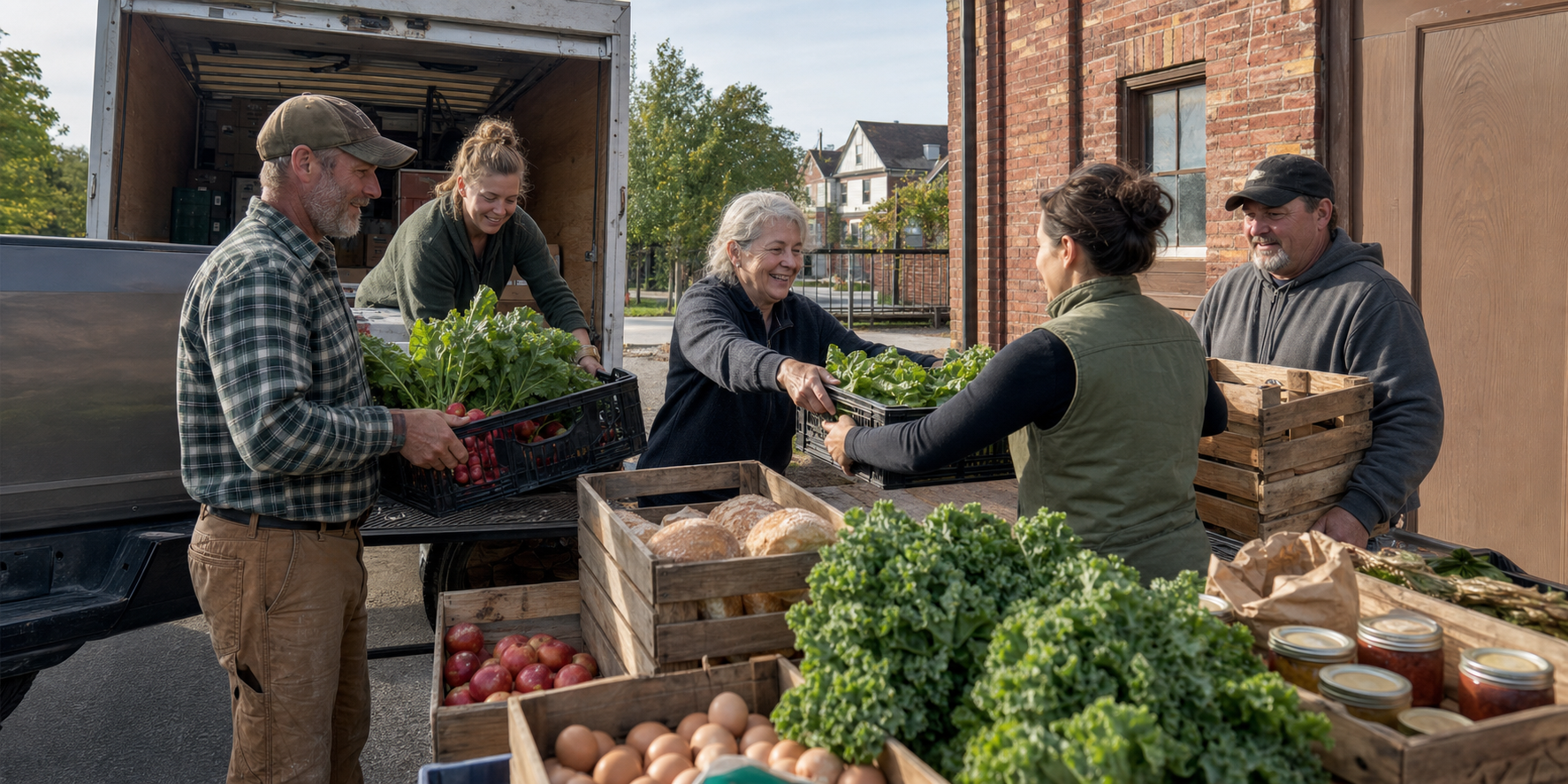
A welcoming neighborhood grocery offering practical everyday staples alongside food from Michigan farms and producers whenever possible.
-
Space and systems that help farmers, food makers, and other producers reach customers in Bloomingdale and throughout the surrounding region.
-
Shared infrastructure that may support food preparation, product development, producer collaboration, classes, and small-enterprise opportunities.
-
Flexible space for children’s art, family activities, dance and movement, music, performances, creative classes, community celebrations, and programs led by local artists, educators, and organizations. The developing Cultural Center is envisioned as an active, welcoming place where people of all ages can gather, create, learn, and participate.
-
The restoration and productive reuse of a prominent historic building, bringing new activity to Main Street while preserving an important piece of Bloomingdale’s identity.
These ideas will continue to be refined through building planning, regulatory review, financial analysis, and community participation.
Two Organizations,
One Community Mission
-
The Bloomingdale Development Association is a Michigan nonprofit corporation responsible for the broader community-development mission. BDA is pursuing the acquisition and stewardship of the Cardinal Club, coordinating grants and partnerships, and guiding the long-term development of the property.
BDA’s application for federal recognition under Section 501(c)(3) is in preparation. Federal tax-exempt recognition has not yet been granted.
-
The Bloomingdale Community Co-Op is being organized as a separate consumer cooperative corporation on a nonstock membership basis. Its intended role is to develop and operate the community-owned grocery enterprise.
The Co-Op’s Articles of Incorporation were submitted to the State of Michigan on July 20, 2026, and the filing is awaiting state acceptance.
The organizing group must still complete the bylaws, confirm the initial governance structure, establish membership procedures, and develop a sound operating and financial plan before memberships formally begin.
Keeping the two organizations distinct helps protect the building’s long-term community purpose while allowing residents to exercise democratic control over the grocery operation.
-
The Co-Op is being developed around a simple principle:
One Member, One Vote
A cooperative is owned by the people who use and support it. Each member has one vote, regardless of how much that member purchases or contributes.
Community ownership means local residents can help elect directors, participate in major decisions, and shape the priorities of the grocery.
Memberships are not open yet. The organizing group is currently developing the bylaws, membership process, capitalization plan, and operating model needed to launch responsibly.
When those pieces are ready, the community will receive clear information about membership, costs, rights, responsibilities, and opportunities to participate.
Where the Project Stands
Meaningful progress has already been made:
A purchase agreement for the Cardinal Club has been executed.
Financing for the acquisition and interim costs has been secured.
Building inspections have been completed.
The property acquisition is awaiting closing.
The Bloomingdale Community Co-Op’s formation documents have been submitted to the State of Michigan.
Early building, water, regulatory, and food-establishment planning is underway.
Co-Op governance, bylaws, membership procedures, and the operating model are being developed.
Community workshops are continuing to guide the project.
There is still substantial work ahead. Closing, building design, regulatory approvals, fundraising, renovation planning, operating analysis, governance development, and community organizing must all move forward carefully.
We will continue sharing updates as major milestones are completed.
Built Through Community Participation
The strongest version of this project will not come from one person or one organization. It will come from residents bringing their experience, questions, skills, and ideas to the table.
-
Learn what is happening, ask questions, and help shape the Co-Op’s priorities and operating model.
-
Tell us what products, services, hours, prices, and features would make a local grocery genuinely useful to you.
-
We will need help from people with experience in retail, farming, food production, finance, governance, marketing, construction, education, technology, and community organizing.
-
Introduce us to farmers, food makers, institutions, businesses, and organizations that may want to supply, support, or collaborate with the project.
-
Sign up for updates so you can follow the Cardinal Club acquisition, Co-Op development, community meetings, and future participation opportunities.
Help Build Bloomingdale’s Next Grocery
Bloomingdale has an opportunity to create something lasting: a grocery rooted in local ownership, a renewed historic building, and a stronger connection between residents, producers, and the surrounding region.
We are still building the foundation, and community participation now will help determine what this project becomes.
Attend a workshop. Share your ideas. Follow our progress. Help us build it together.
Please complete our Community Co-Op Survey
The Cardinal Club purchase remains subject to completion of closing. The Bloomingdale Community Co-Op’s state filing is pending acceptance. Memberships are not currently being offered. Building concepts and illustrations are exploratory and do not represent finalized or approved architectural plans.